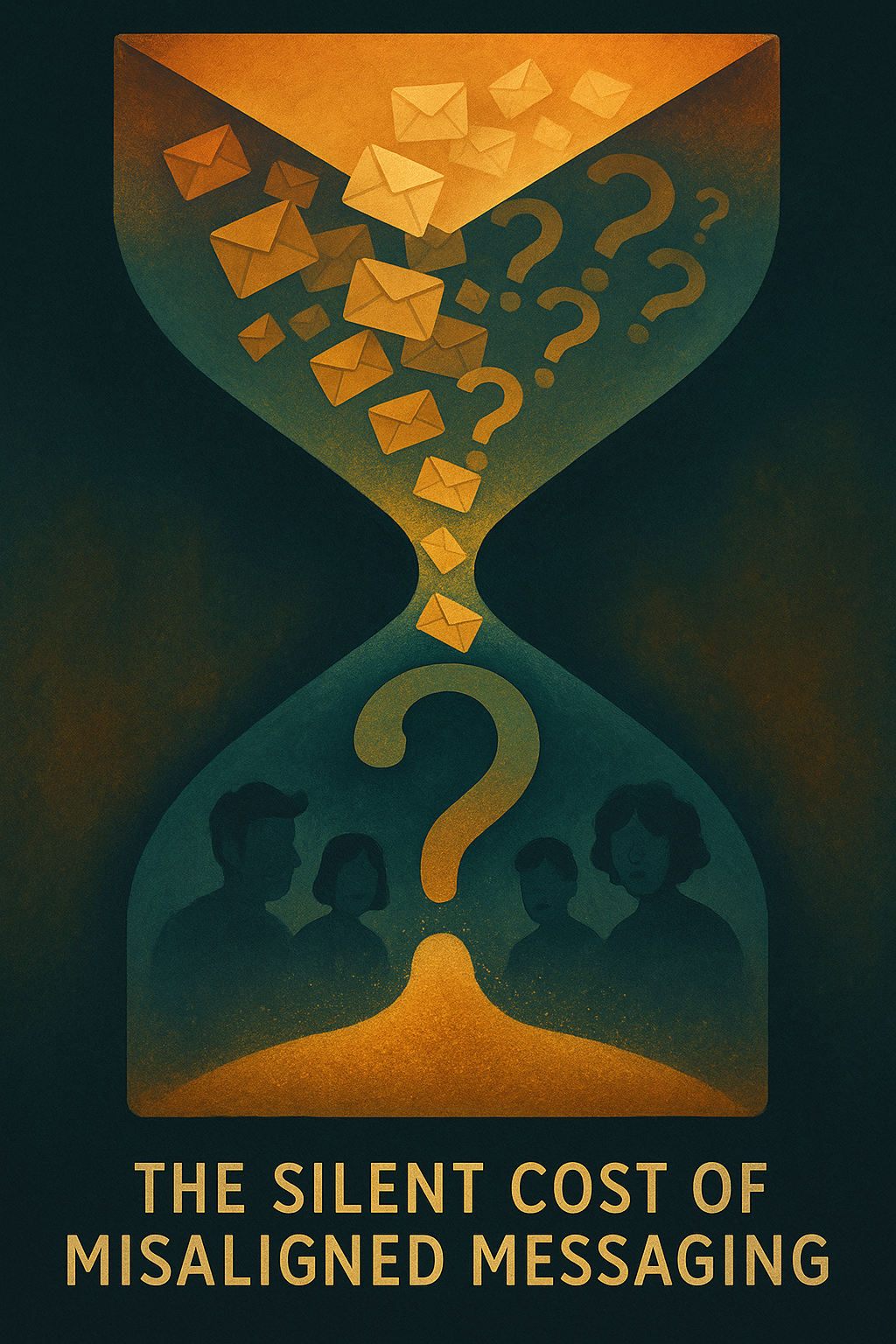
Why Your Email Subscribers Aren’t Buying—And How to Trigger the Sale Instinct
When Opens Don’t Equal Sales
You did everything by the book. You built the list. You crafted the lead magnet. Your open rates? Decent. Your click-throughs? Not terrible. But sales? Crickets.
You’re staring at a growing list that looks alive on the surface—but refuses to convert. It’s maddening. And it makes you question everything: your offer, your copy, even your business.
But here’s the truth no one talks about: The problem isn’t what you see. It’s what you’re not seeing.
Let’s pull back the curtain.
What’s Really Going On Inside Your Subscriber’s Head
Why Trust Isn’t a Checkbox—It’s a Continuum
When someone joins your email list, they aren’t pledging loyalty. They’re giving you a shot—a tiny crack in their mental wall, hoping you’ll deliver something useful.
Most creators mistake that opt-in as consent to sell. But it’s not. It’s a test. And if your emails sound like pitches before you’ve earned their confidence, that window slams shut.
Trust isn’t a one-time event. It’s re-earned with every subject line, every scroll, every subtle cue that says: I get you.
Too Much Noise, Not Enough Signal
Inboxes are exhausting. Your subscriber isn’t lounging at a desk, sipping coffee while savoring your latest message.
They’re scanning, skipping, skimming. One eye on their phone, one on their kid, their calendar, their chaos.
If your emails demand effort, they’ll be ignored. If your CTA feels risky, they’ll hesitate. And if they’re not emotionally hooked within seconds? They’re gone.
It’s not your fault. But it is your challenge.
Five Quiet Killers of Conversion (That You Won’t Find in Analytics)
1. Your Freebie and Your Offer Don’t Match
Think of your lead magnet like a first date. If you talk about hiking and coffee but your actual offer is a steakhouse dinner, you’re setting the wrong tone.
When the lead magnet solves a different problem than your paid product, you’re nurturing the wrong people—or worse, confusing the right ones.
Your subscribers aren’t just looking for information. They’re chasing a version of themselves they believe is possible.
Talk to that version.
When your emails reflect the identity they’re striving for—the confident coach, the thriving founder, the artist who finally earns—you become relevant. And relevance converts.
3. You Forgot to Make Them Feel
You can teach until your keyboard bleeds, but if your email never stirs the gut, it won’t move the wallet.
Paint the struggle. Illuminate the outcome. Give them a reason to want the transformation—not just understand it.
Logic informs. Emotion sells.
4. You’re Over-Giving and Under-Inviting
There’s nurturing. And then there’s enabling.
If you keep giving value without ever inviting them into the next step, you’re conditioning passivity. They’ll start seeing you as helpful but not essential.
Rhythm builds trust. When you ghost your list for two weeks, then show up with a hard pitch, you reset the relationship.
Consistency isn’t about volume. It’s about presence. A regular cadence makes you part of their mental landscape.
What Actually Moves People to Buy
Scarcity That Speaks to Their Future
“Only 3 left” doesn’t cut it anymore. People want to know what they’ll lose by staying stuck.
Make the scarcity personal. What opportunity disappears if they don’t act? What version of themselves fades if they wait too long?
This isn’t about fake deadlines. It’s about real stakes.
Get Them to Say Yes in Small Ways
Before anyone spends money, they need to feel momentum. That begins with tiny commitments: a reply, a click, a choice.
Micro-actions warm the engine. Every yes stacks emotional investment. When the offer arrives, it doesn’t feel like a leap. It feels like the next step.
Because you’re teasing without tension. Because you’re answering questions before they have a reason to care. Because your call-to-action feels like a conclusion instead of a curiosity trigger.
Try starting mid-story. Lead with a problem they didn’t know they had. End with an open loop they have to click to resolve.
“Am I emailing too much—or not enough?”
You’ll know by the energy, not the analytics.
Are they replying? Clicking? Showing signs of life?
Then you’re present, not pushy.
If your open rates are fading and unsubscribes are spiking, shift gears. Shorter emails. More curiosity. Less teaching.